Dr. Lew Lim
Vielight |
CEO and Founder
PhD Electrical Engineering
University of California (Berkeley)
MBA
Sheffield University
Certificate of Neuroscience
Duke University
Experience at Vielight
Dr Lew Lim founded Vielight in 2012. With his background in electrical engineering and neuroscience, he developed the field of home-use brain photobiomodulation technology in 2014 and has co-authored multiple papers and lectured extensively.
Publications
2024 | Traumatic brain injury (TBI)
Traumatic Brain Injury Recovery with Photobiomodulation: Cellular Mechanisms, Clinical Evidence, and Future Potential
Read more2022 | Viral recovery and immunity
Home-use Photobiomodulation Device Treatment Outcomes for COVID-19.
Read more2020 | Traumatic brain injury (TBI)
Changes in Brain Function and Structure After Self-Administered Home Photobiomodulation Treatment in a Concussion Case.
Read more2019 | Neuromodulation
Pulsed Near Infrared Transcranial and Intranasal Photobiomodulation Significantly Modulates Neural Oscillations: A Pilot Exploratory Study.
Read more2017 | Alzheimer’s
Significant Improvement in Cognition in Mild to Moderately Severe Dementia Cases Treated with Transcranial Plus Intranasal Photobiomodulation: Case Series Report.
Read moreAuthor's Contributions


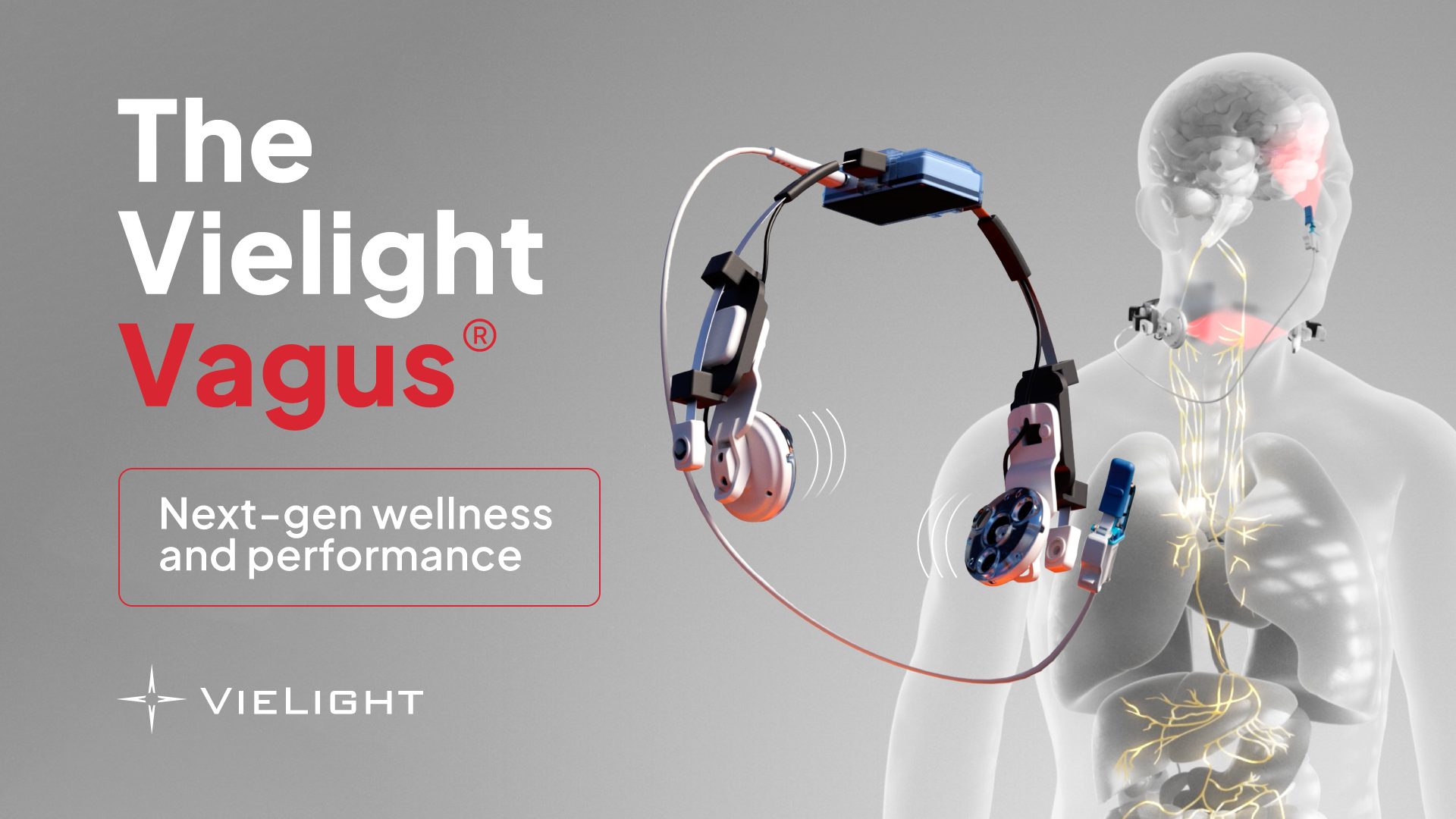
The Next Evolution of Vagus Nerve Stimulation: Introducing the Vielight Vagus


Long COVID-Brain Fog Research Summary | Vielight Neuro RX Gamma | The Lancet eClinicalMedicine


Cellular Study: Vielight Neuro Pro’s NIR Light Shifts Metabolism in Cancer Cells


TBI Recovery and Photobiomodulation Research Paper Published | Dr. Lew Lim
This blog article summarizes a published study by Vielight's founder, Dr. Lew Lim, on how PBM could potentially help with TBI.


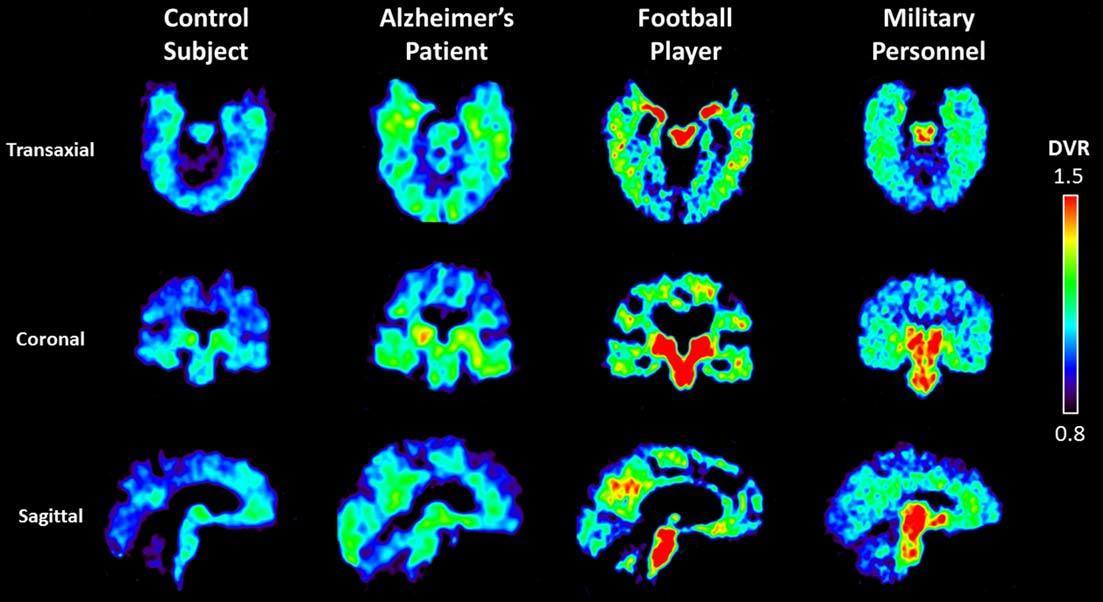
TBI (CTE) and Brain Photobiomodulation | Mechanisms and Clinical Results with Vielight Neuro
Chronic traumatic encephalopathy (CTE) is a degenerative brain disease that is believed to result from repeated head injuries, particularly concussions.


What are the differences between the Vielight Neuro Alpha and Neuro Gamma devices?
The question, "When should I use an alpha frequency and when should I use a gamma frequency?" is not new. In the context of brain photobiomodulation and...


Brain Photobiomodulation Pathways, Their Benefits and Opportunities
Numerous studies conducted over the last two decades have shown the beneficial effects of photobiomodulation (PBM) on the body. Furthermore, a lot of...


Types of Brain Stimulation Technology
The enhancement of human cognitive processes has long been a focus of scientific discovery. Progress in technology and research, has lead to non-invasive...


Vielight Bi-Annual Update
Vielight Neuro Gamma Shines in a Brain Injury Study


Shedding Light on Photobiomodulation in Neuropsychiatric Disorders
Brain photobiomodulation has potential applications in the field of psychiatry.


Brain Stimulation with Light Energy
Brain stimulation using light, or transcranial photobiomodulation, are gaining scientific recognition in the world of non-invasive brain stimulation.


Biohacking Extraordinary Brain Functions
Biohacking extraordinary brain functions with light is appealing to many biohackers, and recent Biohacker Summit in Helsinki was a good proof to that.


Photobiomodulation Creates Multi-factorial Pathways
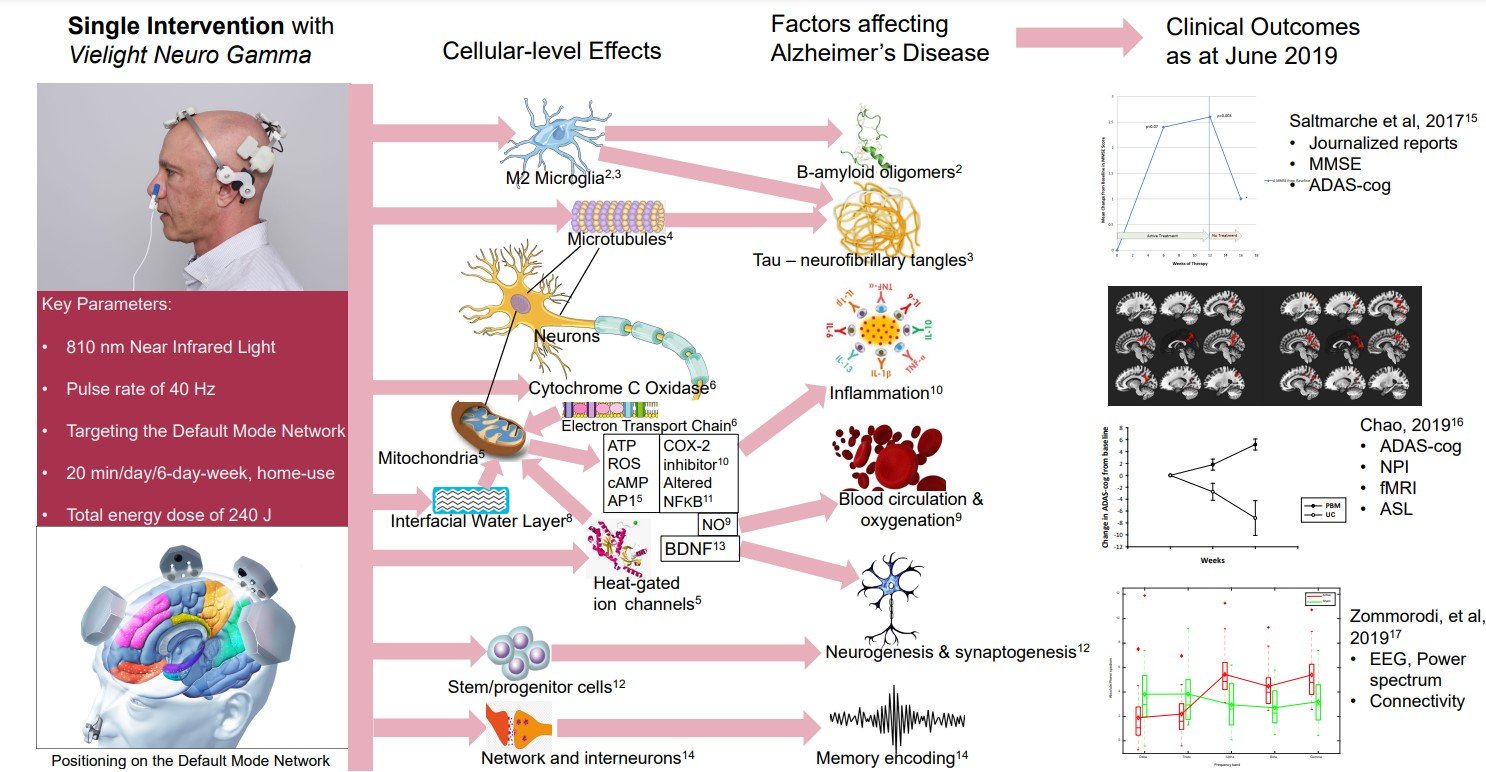
"One Intervention, Multi-factorial Pathways", a theory of why transcranial photobiomodulation could work for Alzheimer's Disease treatment.


Continuing PBM Research Efforts
Continuing PBM Research Efforts: Beneath the noise and conundrum, Vielight has been quietly developing a novel solution with the Vielight Neuro RX Gamma.


Transcranial PBM for Traumatic Brain Injuries: New Studies
Research suggests that transcranial Photobiomodulation could be helpful with long-term brain injury symptoms from repeated head injuries in pro athletes.